Should You Use Decorative Stone Instead of Mulch?
When you’re finishing a landscape project, the material you put on top of the soil matters more than most homeowners expect. Mulch can make beds look fresh and help plants thrive, while decorative stone can deliver a cleaner look with less yearly upkeep. The catch is that the “best” choice depends on how your yard handles water, how much sun the area gets, what you’re planting, and how much maintenance you actually want to do season after season.
At Property Docktors, we help homeowners across Lenoir City and nearby communities choose a ground cover that fits their yard and their lifestyle. Below is a practical breakdown of mulch versus decorative stone, what each does well, where each causes problems, and how we help clients avoid the common mistakes that lead to washed-out beds, weeds, and expensive do-overs.
Why this decision matters
Ground cover is not just a finishing touch. It affects moisture, soil temperature, weed pressure, drainage, and how “stable” your beds stay after storms. If your beds flood, dry out too fast, or keep washing onto the lawn, switching plants rarely fixes the underlying issue. The base layer and the way the bed is built is usually the real problem.
Choosing the right material up front helps you:
-
- Keep plants healthier by maintaining consistent moisture and reducing root stress
- Cut down on weeds by blocking light and limiting seed germination
- Reduce washouts and muddy edges during heavy rain
- Protect nearby hardscapes like patios and walkways from soil and mulch migration
- Lower long-term maintenance by picking a solution that matches the site conditions
If you are planning a bigger refresh, this is also where budgeting gets easier. A quick read through the Landscape Pricing Guide can help you set expectations for bed work, planting, and drainage improvements. If the project ties into new borders, edging, or adjacent patio and walkway work, the Hardscape Pricing Guide can help you plan the full scope instead of tackling it in piecemeal repairs.
Benefits of using mulch
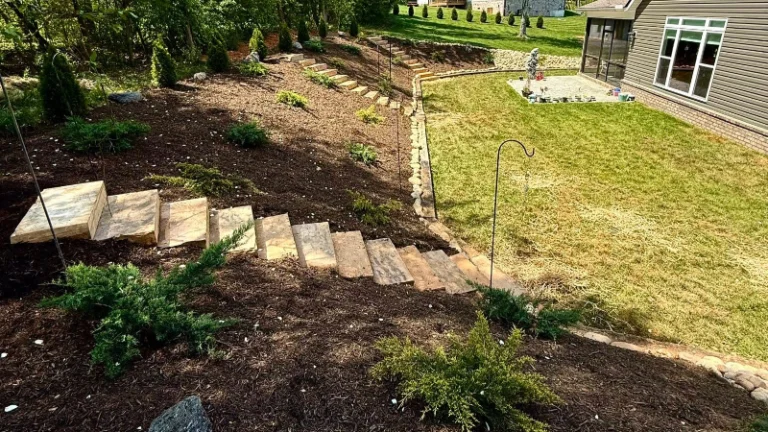
Mulch is popular for a reason. In the right application, it is one of the most plant-friendly finishes you can put in a bed. It is also flexible, which is helpful in landscapes where homeowners like to swap annuals, add shrubs over time, or change the layout as the yard matures.
At Property Docktors, we often recommend mulch installation when the goal is healthier soil, better moisture retention, and a more natural bed aesthetic.
Here are the biggest advantages:
-
- Improves soil over time
Organic mulch slowly breaks down and adds organic matter back into the soil. That improves structure, supports beneficial microbes, and makes it easier for roots to expand. - Helps soil hold moisture
Mulch acts like a blanket that reduces evaporation. In East Tennessee summers, that often means less stress on shrubs and perennials and fewer swings between “soaked” and “bone dry.” - Reduces weeds without chemicals
A properly installed mulch layer blocks sunlight from reaching weed seeds. You will still get the occasional invader, but the difference in maintenance is noticeable when the bed is built correctly. - Protects roots from temperature swings
Mulch buffers the soil from rapid heating and cooling. That matters around foundations, in full sun, and in beds that get hit by reflective heat off driveways or walls. - Works well around plants that need “soil contact”
For flower beds, shrubs, and areas that get frequent planting changes, mulch is easier to move aside and refresh without disturbing root systems. - Looks finished fast
Mulch gives you a clean, uniform look immediately. It is one of the quickest ways to make a landscape feel cared for and intentional. - Lower upfront cost
Mulch is typically more budget-friendly at installation than stone, especially when beds are large. Many homeowners like the flexibility of updating color or style as the rest of the landscape evolves.
- Improves soil over time
A quick note on performance: mulch works best when the bed is edged properly, installed at the right depth, and not dumped up against the base of the home. The “mulch volcano” look around trees and foundations is more than a style issue, it can cause plant stress and moisture problems. That is why we treat mulch as part of the bed construction, not just a material we spread at the end.
Benefits of using decorative stone
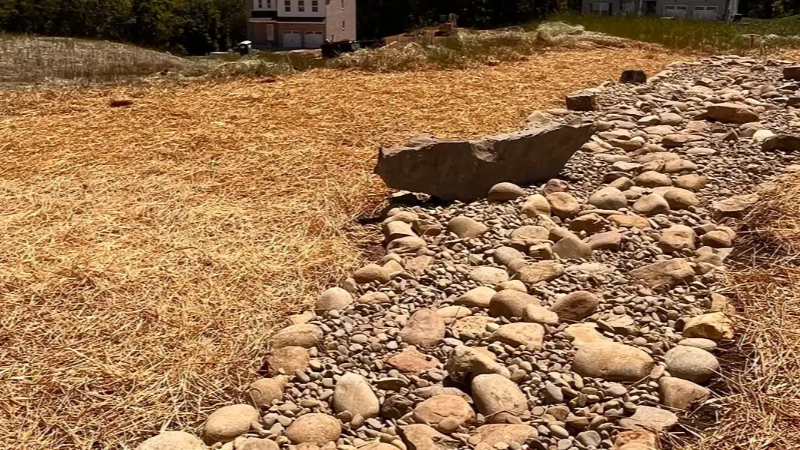
Decorative stone installation is a great option when you want a crisp look and you do not want to refresh material every year or two. Stone does not decompose, it is less likely to float away, and it pairs well with modern landscape designs and lower-water planting styles.
We often recommend stone in Lenoir City area landscapes when homeowners want a cleaner appearance, have problem areas that wash out, or need a surface that holds up around utilities and hardscapes.
Here is what stone does well:
-
- Long-term coverage with less annual upkeep
Once installed correctly, stone stays put and does not break down. You are not topping it off every season just to keep beds looking even. - Great for “utility” zones and low-plant areas
Stone is ideal around HVAC units, along side yards, under decks, and in narrow spaces where mulch tends to migrate or get messy. - Helps with erosion when built with the right base
On slopes or runoff-prone areas, stone can reduce washouts, especially when paired with good edging and smart grading. In some landscapes, stone complements broader drainage solutions by keeping surface areas stable around water paths. - Clean, tailored aesthetics
Stone can look sharp and intentional, especially when the rest of the yard includes hardscaping elements like pavers, retaining walls, or step areas. - Works well in lower-water planting styles
If you are leaning into drought-tolerant plantings or a more structured landscape, stone can support that direction, especially when paired with well-planned bed layout and plant selection. - Holds up near patios and walkways
Stone is less likely than mulch to get kicked onto a patio or tracked into the house, which many homeowners appreciate in high-traffic outdoor living spaces. - Weed reduction when installed correctly
Stone alone does not “stop weeds,” but when installed with proper base prep, clean separation layers, and correct depth, it significantly reduces the conditions weeds need to thrive.
- Long-term coverage with less annual upkeep
Stone can be a really smart investment, but the key phrase is “installed correctly.” The biggest failures we see are stone placed over poor fabric, installed too thin, or used in beds without proper edging. Those shortcuts create weed headaches and messy migration that homeowners end up paying to correct later.
Downsides to consider
Both options have tradeoffs. The mistake is assuming one is always “better,” then forcing it into an area where it does not perform well.
Mulch drawbacks
Mulch is plant-friendly, but it demands some routine upkeep.
-
- It breaks down and needs refreshing
Most beds need topping off to maintain appearance and weed suppression. If you skip refreshes for years, the bed usually turns into a thin layer of decomposed material that grows weeds easily. - It can wash out in heavy rain
Beds at the base of slopes or near downspouts are common washout zones. In those cases, we often recommend addressing water flow first through grading and drainage, or switching materials in just that area. - Placement near structures matters
Mulch packed against siding or kept constantly wet can create issues. Proper bed edges and a clean buffer reduce risk and keep things looking professional.
- It breaks down and needs refreshing
Stone drawbacks
Stone is durable, but it is not always plant-friendly, and it is harder to change once installed.
-
- It can run hot in full sun
Stone absorbs heat, which can stress sensitive plants, especially shallow-rooted flowers. In a sunny front yard, we think carefully about plant choice and irrigation before recommending stone throughout. - Higher upfront cost
Material, delivery, base prep, and installation can add up. Many homeowners still choose it because it reduces future refresh cycles, but it is important to price it realistically from the start. - It does not improve soil
If soil quality is poor and the bed is meant to support heavy plant growth, mulch often does a better job supporting plant health long-term. - It is harder to “edit” later
If you want to change plant layout frequently, stone can be a hassle. It is best for beds where the design is stable and the plants are meant to stay.
- It can run hot in full sun
If you are on the fence, we usually look at three things first: sun exposure, how water moves through the area, and whether the bed is plant-focused or structure-focused. Those answers make the decision clearer fast.
Can you combine both?
Yes, and in many landscapes it is the best approach.
A common strategy is:
-
- Use mulch where plants need better soil, moisture control, and seasonal flexibility
- Use decorative stone in problem zones like downspout areas, narrow side yards, utility strips, or sections that repeatedly wash out
This blend can also create a more intentional landscape design, especially when stone is used to define transitions near patios, walkways, and entry areas.
Our approach to helping you decide
We treat ground cover as part of the design and performance of the landscape, not a last-minute cosmetic choice. That means we look at:
-
- Water behavior, including roof runoff, slope direction, and low points
- Soil conditions, including compaction and how fast the bed drains
- Sun and heat exposure, especially in south-facing beds
- Plant goals, whether you want low-maintenance shrubs, seasonal color, or something in between
- Long-term maintenance preference, what you will realistically keep up with year after year
If the beds are being affected by runoff, we often pair bed work with drainage improvements or grading so the new finish does not immediately wash out. If you are planning a broader refresh, we can also fold this into landscape design so the planting, edging, and materials all work together.
For homeowners who like to “see it” before committing, our landscape visualizer is a helpful way to compare looks, especially when you are choosing between mulch color options, stone size, or a mixed-material layout.
Proudly serving East Tennessee communities
Property Docktors provides expert landscaping, mulch installation, and decorative stone installation services in:
-
- Lenoir City
- Loudon
- Knoxville
- Farragut
- Tellico Village
- Oak Ridge
- Rarity Bay
- Kahite
Let’s make your landscape low-maintenance and beautiful
If you are tired of mulch washing out, or you want beds that stay crisp and clean year-round, we can help you choose the right material and install it the right way.
Property Docktors will evaluate your yard conditions, explain the tradeoffs clearly, and recommend the best fit for your plants, your layout, and your maintenance goals. Request an estimate online to schedule a site visit in Lenoir City or the surrounding area.